
"coffee exporting nations"
4000 article(s) found

Colombian coffee raw bean grading method
One: according to the defect rate, the number of defective beans allowed per 500 gr sample:-Private raw bean exporter: 72 defects-National Coffee Council: 42 defects defective beans are divided into two types:-first: known as first-level defects-second: called second-level defects first: main defects (defects that affect coffee taste characteristics): black beans, moldy beans.

Aromatic, pure, slightly acidic Salvadoran Himalayan coffee flavor Taste Manor Introduction
The flag of El Salvador was adopted in 1822, revoked in 1865, restored in 1912, and officially established as the flag of El Salvador in the Constitution of 1972. The flag is rectangular in shape and has an aspect ratio of 335:189. The flag is composed of three parallel rectangles of blue, white and blue from top to bottom. The white part is painted with the national emblem pattern in the center. Because El Salvador was the original.
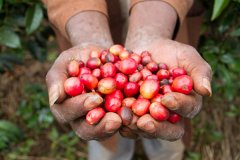
Colombian coffee raw bean grading method
One: according to the defect rate, the number of defective beans allowed per 500 gr sample:-Private raw bean exporter: 72 defects-National Coffee Council: 42 defects defective beans are divided into two types:-first: known as first-level defects-second: called second-level defects first: main defects (defects that affect coffee taste characteristics): black beans, moldy beans.

Introduction to the characteristics of El Salvador Himalayan Coffee Flavor Flavor Manor
El Salvador coffee El Salvador (ElSalvador) is one of the small countries in Central America, where coffee is light, aromatic, pure, slightly sour and characterized by excellent balance of flavor. It is a specialty of Central America. With sour, bitter, sweet and other taste characteristics, the best baking degree is moderate, deep. The origin of coffee in the early 1990s, guerrilla warfare greatly damaged the country's national economy and made coffee

Costa Rican Coffee Goddess Manor Flavor with unique strong fragrance introduction to fine coffee
The United Fruit Company of the United States took over Keith Industry in 899 and controlled the production and export of railways and bananas. In 1913, banana exports ranked first in the world. In 1917, F. Tino Granados staged a coup and established a military dictatorship. After Tinoco Granados stepped down, successive rulers were controlled by American monopoly capital. The labor movement sprang up in the 1930s. Founded in 1931, Goth

Introduction to the characteristics of the manor producing area with strong flavor of Ethiopian coffee
In Ethiopia, the grading and quality control system of coffee is divided into three levels: producer, regional and national. All coffee is inspected by local inspection agencies before leaving the country of origin, and then re-tested at the coffee inspection and grading centers in Addis and Diredawa to determine its quality grade. Coffee is graded before auction and sale, for all involved in production, acquisition,
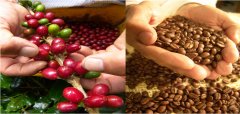
Classification of Colombian boutique coffee beans characteristics, taste and brand of Colombian coffee beans
Some ways of grading Colombian boutique coffee beans: 1: according to the law, according to the National Coffee Council, only high-quality coffee beans are allowed to be exported. These are set by the National Coffee Committee. Commercial rating: Maragogype Supremo Excelso and UGQ boutique rating: Grade AA Grade Special Grade each grade in beans

Ethiopian coffee flavor with intense nutty aromas. Manor characteristics. Fine coffee medium.
In Ethiopia, coffee classification and quality control systems are divided into producer, regional and national levels. All coffees are inspected by local inspection agencies before they leave the country of origin, and then re-inspected at coffee inspection and grading centres in Addis and Diredova to determine their quality grade. Coffee is graded prior to auction and sale, and all participants in production, acquisition,

Introduction to the varieties of Colombian coffee beans
In the early 1960s, coffee production was about 600kg per hectare. Now it has risen to about 900kg, and some farms can reach 2500 kg. However, quality assurance is a top priority for the coffee industry. Colombia established the National Coffee Management Association (Federacion Nacional de Cafeteros, or FNC) in 1927, which is responsible for quality supervision. Although the association is a private company

Flavor description of Ethiopian Honey Kiss Coffee beans introduction of varieties produced by grinding scale
Flavor description of Ethiopian Honey Kiss Coffee beans in Ethiopia the classification and quality control system of coffee is divided into three levels: producer, regional and national. All coffee is inspected by local inspection agencies before leaving the country of origin, and then re-inspected at the coffee inspection and grading centers in Addis and Diredawa to determine its quality.

Aromatic, pure Salvadoran coffee beans Flavor Description Grind Scale Variety Taste Introduction
Aromatic, pure Salvadoran coffee beans Flavor Description Grind Scale Variety Taste Description Salvadoran coffee is a specialty of Central America, where the coffee body is light, aromatic, pure and slightly acidic. Like Guatemala and Costa Rica, coffee in El Salvador is graded according to altitude, with the higher the altitude, the better the coffee. The best brand is Pipil, which is a

Introduction of Coffee Variety treatment Manor of Lion King Coffee in Sidamo, Ethiopia
Ethiopia Sidamo Lion King Coffee Bean Variety processing Manor before 1974, coffee production, processing and trade rights were in private hands. During the military administration, private farms were nationalized and smallholder coffee producers were snubbed. In 1991, the Ethiopian Transitional Government issued a new economic policy to encourage private businessmen to export coffee. As a result, private coffee

Unique flavor of Sidamo Coffee Manor Ted Manor Coffee Grinding degree roasting degree treatment method
During the harvest, farmers harvest fresh red fruit every day, and every two days the coffee fruit is sent as a unit or sold to a washing plant for treatment. coffee fruit that has not gone through a water treatment plant is usually naturally fermented for about 12 hours, and then passed through the sun for drying and shelling. in any case, farmers always try their best to send them to the water treatment plant for treatment so that they can be washed.

El Salvador coffee flavor taste manor production area characteristics of boutique coffee introduction to Renas Manor
The national emblem of El Salvador was used on September 15, 1912. The national emblem of El Salvador is an equilateral triangle whose three yellow lines represent equality, truth and justice respectively. Five volcanoes rise between the Pacific Ocean and the Atlantic Ocean, symbolizing the five countries in Central America. The pole of freedom and the red cap of freedom stand high on the top of the mountain, radiating the light of freedom and liberation.
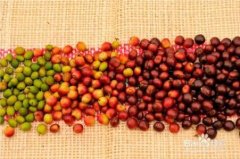
A brief introduction to the market price of fragrant and mild El Salvador Himalayan coffee varieties
The government finally realized the great role of coffee in the national economy, such as solving employment, earning foreign exchange and developing agricultural production, so it privatized some coffee export industries in 1990, hoping to increase the income rate of coffee in the export market. Salvadoran coffee ranks alongside Mexico and Guatemala as producers of Asa and Meldo, and is competing with other countries.

Ethiopian Coffee characteristics introduce Ethiopian Coffee Brand Ethiopian Coffee varieties
In Ethiopia, the grading and quality control system of coffee is divided into three levels: producer, regional and national. All coffee is inspected by local inspection agencies before leaving the country of origin, and then re-tested at the coffee inspection and grading centers in Addis and Diredawa to determine its quality grade. Coffee is graded before auction and sale, for all involved in production, acquisition,
Boutique coffee Salvadoran coffee flavor coffee plum, brown sugar, red wine sour
In the early 1900s, guerrilla warfare greatly damaged the country's national economy, reducing coffee production from 3.5 million bags in the early 1970s to 2.5 million bags in 1990-1991. The eastern part of the country was most affected by guerrilla warfare, and many farmers and workers were forced to leave the manor. The shortage of funds has led to a sharp drop in coffee production, from 1200 kg per hectare in the past to no yield per hectare today.

Introduction to the producing areas of pure and slightly sour Salvadoran coffee flavor description and grinding degree
In the early 1990s, guerrilla warfare greatly damaged the country's national economy, reducing coffee production from 3.5 million bags in the early 1970s to 2.5 million bags in 1990-1991. The eastern part of the country was most affected by guerrilla warfare, and many farmers and workers were forced to leave the manor. The shortage of funds has led to a sharp drop in coffee production, from 1200 kg per hectare in the past to today's yield per hectare

Taste mellow Costa Rican Saint Roman Manor Coffee Flavor Variety characteristics of Fine Coffee
In 1949 Figueres Ferrer handed over power to the elected leader of the National Union Party, O. Ullat Blanco. In October 1951, led by Figueres Ferrer, the National Liberation Party was founded. In the six general elections from 1953 to 1978, the National Liberation Party won four times. When the party was in power, it stressed that the state intervened in the economy, nationalized some industries and raised import taxes to protect the nation.
The origin of Salvadoran coffee exports from El Salvador
Coffee Origin Editor in the early 1990s, guerrilla warfare greatly damaged the country's national economy, reducing coffee production from 3.5 million bags in the early 1970s to 2.5 million bags in 1990-1991. The eastern part of the country was most affected by guerrilla warfare, and many farmers and workers were forced to leave the manor. The shortage of funds has led to a sharp drop in coffee production, from 1200 kg per hectare in the past to today